I Bought a Share of a Racehorse and My Kids Think I'm Tommy Shelby
I Bought a Share of a RaceHorse and My Kids Think I'm Tommy Shelby.
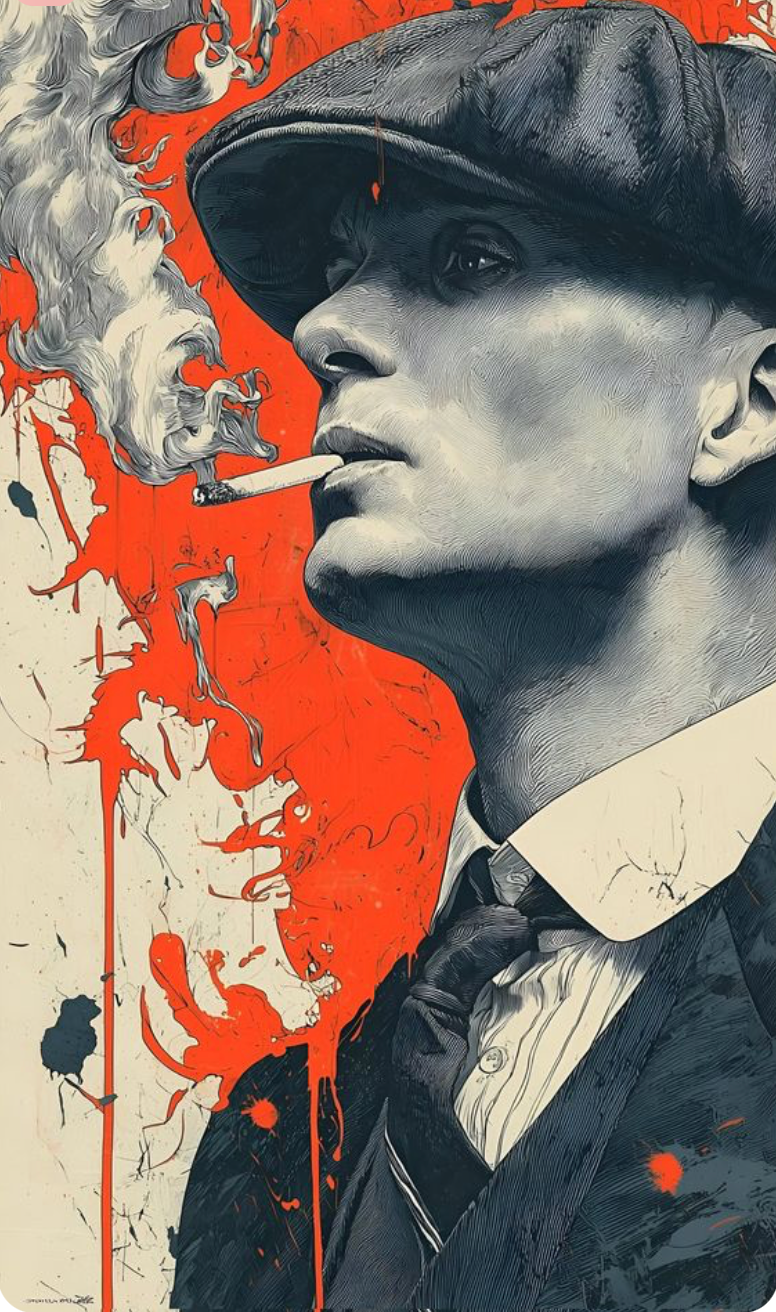
When I told my kids I'd become an investor in a racehorse, they looked at me like I'd just been cast in Peaky Blinders. "Dad. You're Tommy Shelby." Probably the coolest thing they've said to me.
But here's what I didn't tell them. I had no freaking idea what I'd actually bought.
We ran an ad for MyRaceHorse. It looked really cool. I clicked. I bought. I became, technically, a racehorse owner. And then I sat there wondering what on earth I had just signed up for.
So I did what Tommy Shelby would do. I got the founder on the phone and demanded he explain, slowly and like he's talking to my mother, what I had just done. (I didn't demand - I gently asked.)
His name is Michael Behrens. He ran an ad agency in Pasadena for 20 years, did a tour as CMO at Casper, and then because nothing in a man's career progresses in a straight line, moved his wife, three kids, and two dogs to Lexington, Kentucky to build the world's largest fractional racehorse ownership platform. His co-founder was the late B. Wayne Hughes, the guy who started Public Storage and American Homes. They've won the Kentucky Derby. They run horses at Royal Ascot. Fifteen minutes before our call, Michael got outbid on an 850-thousand-dollar yearling that has, in his own words, "never run more than a furlong in his life" and may never win a race.
Over the next thirty minutes he told me a dozen things I didn't know. Here are the seven that made me want to buy more shares.
1. The fastest way to become a millionaire in horse racing is to start with two.
Michael told me a buddy of his said that line years ago, and it's the perfect distillation of why this industry exists in the form that it does. Owning a racehorse is wildly expensive and super risky. Most horses never earn back what their training costs. Some never make it to a starting gate. And yet collectively, the industry pays more for these animals than they're objectively worth, because the experience of getting one to the Kentucky Derby is, for a certain kind of person, the ultimate dream.
That's the gap MyRaceHorse fills. You get to chase the dream without selling your house.
2. The racetrack is where you build your resume. The breeding shed is where you get paid.
This is the part of horse racing nobody tells you about until you're inside it. Race purses are okay in the U.S., excellent in Australia, and almost nonexistent in the U.K. So in most jurisdictions, you don't actually make money winning races. You make money by winning the right races, against the right horses, at the right distances, so that when your horse retires, the biggest breeding operations want it.
A horse that becomes a stallion prospect can sell for millions. A filly with the right pedigree becomes a broodmare and produces one foal a year for the rest of her career. The racetrack is essentially a four-legged credentialing system for the breeding industry.
3. They bought a horse for $500K, and sold her for $2.5 million as a broodmare.
She only earned about $400K on the racetrack. The real return came from what she could do next. Michael also told me about a horse they bought in partnership for $9.5 million that was going to race one more season and then become a broodmare, producing one foal per year for the rest of her life. They sold her for $9.5 million.
It made me realize I'd been thinking about this completely wrong. I assumed the goal was to win races. The goal is to build something the breeding industry wants.
4. Their horse Seeds The Gray won the Preakness, and that changed everything.
He was trained by D. Wayne Lukas, who Michael described as legendary, and he doesn't use that word lightly. After the Preakness, MyRaceHorse had a flood of interest in stallion deals. Lukas helped them navigate which races to enter next to maximize the horse's value before retirement. They won the Pennsylvania Derby. They got a multi-million dollar deal with Gainesway Farms, one of the most prestigious stallion farms in the world.
This is the part where I started understanding why Michael uses the word "asset" when he talks about these animals. A great racehorse is an athlete. A great athlete with the right resume becomes a generational financial asset.
5. He owns 100,000 shares of Tesla. I own 10. But we own the same thing.
Michael said this on the call and it's been stuck in my head since. The whole MyRaceHorse model is built on the idea that if a guy in New York running a hedge fund can buy a percentage of a racehorse, a guy in Philadelphia who saw an ad on Facebook should be able to do the same thing. The hedge fund guy just owns more of it.
There are no tiers. No premium owners. Whether you own one share or three hundred, you get the same farm updates, the same trainer reports, the same race-day perks, the same percentage of the purse when your horse wins. Same product. Different sized slice.
6. Fifteen minutes after a race, your share of the purse hits your account.
This is the operational detail that, more than anything else, made me feel like I actually owned a horse. When one of the MyRaceHorse horses wins or places, a third party data integration calculates the purse, cross-references the cap table to figure out who owns what, and distributes the money to every shareholder's account. Within fifteen minutes.
There could be five thousand owners on a single horse. Doesn't matter. Everyone gets paid almost immediately.
It's a small thing. But it's the kind of small thing that proves the whole model is real.
7. The average MyRaceHorse customer owns shares in 11 different horses.
Because diversification is how you survive in this business. Some of your horses will be slow. Some will retire from injury before they ever start a race. Some will be fine. And one, hopefully, will be a champion that makes the whole thing worth it. Michael told me the people who stay in horse racing for decades all do this, just at a different scale. The MyRaceHorse platform lets normal humans run the same playbook the billionaires run, with the share sizes adjusted accordingly.
I bought into one horse to see how it felt. After the call, I started looking at the others.
That's it. That's what I bought. A small piece of a strange and beautiful and genuinely irrational industry, run by people who treat 4,000-shareholder ownership groups with the same care they'd treat a single billionaire owner, all built on the this belief that if you love something, you should be able to participate in it.
If you've ever watched the Kentucky Derby and thought "I'd love to be in that paddock someday" — that's the dream MyRaceHorse is selling. And it turns out you can get there for about the price of a nice dinner.
You can take a look at the horses currently available at myracehorse.com.
Tommy Shelby would approve.
If you want to be notified when I publish something new, you can subscribe here.
— Sean