The Apathy Problem
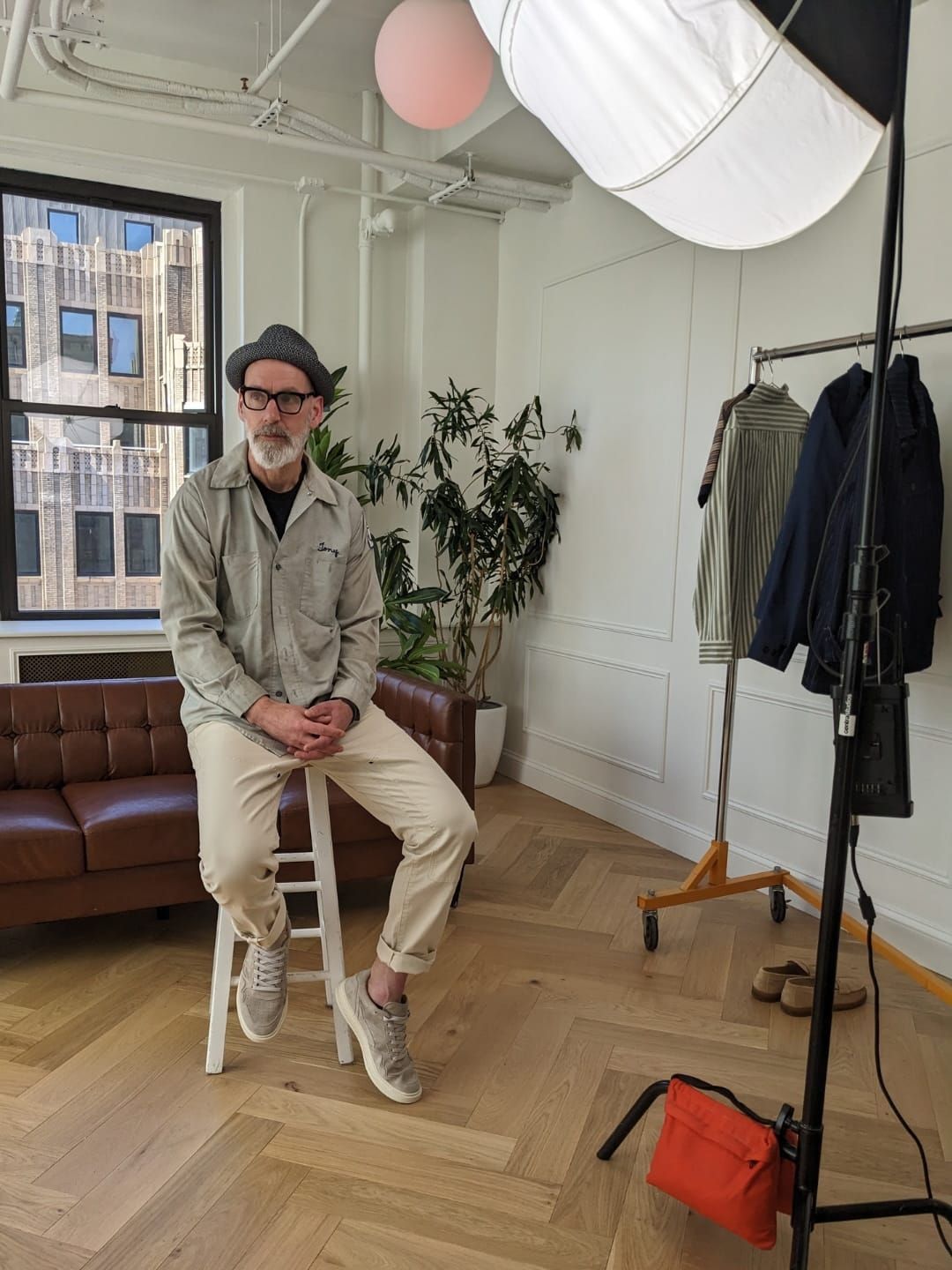
What I learned from being on a show that's trying to fix it.
Somewhere between my forties and now, I stopped caring about a specific set of small things.
Not the important stuff. I still cared about my wife and kids of course. My company. The people around me that matter and I love.
But the small things - that's different. Like what I wore on a Tuesday, whether my haircut was more than eight weeks old. Should I trim my beard and eyebrows? Whether or not it was ok to wear the same jeans and t-shirt for the 10th day in a row. Those small things.
Apathy doesn't hit you over the head with a hammer - it's a slow bleed. Same for most guys. Somewhere along the way you just get complacent. You skip getting that new shirt because you're busy. You wear the same three things on rotation because it's easier - read..my art clothes.
You start dressing for utility instead of dressing for yourself. And one day you look in the mirror and realize you're not exactly a slob, but you're also not really present in what you're wearing. You raise the white flag on a small piece of yourself.
Megan Collins fights this effort apathy at Style Girlfriend, and she thinks it's the biggest problem facing men in their forties and beyond.
She should know. She and her team have spent the last decade making men's style approachable, and they just launched a show waging war on the exact thing I'm struggling with. The show is called Reset Mode. It's short. It's built for social. And it's funded by a 501c3 called The Dads Initiative, which tells you something about who Megan thinks needs this most. Dudes (and dads) like me.
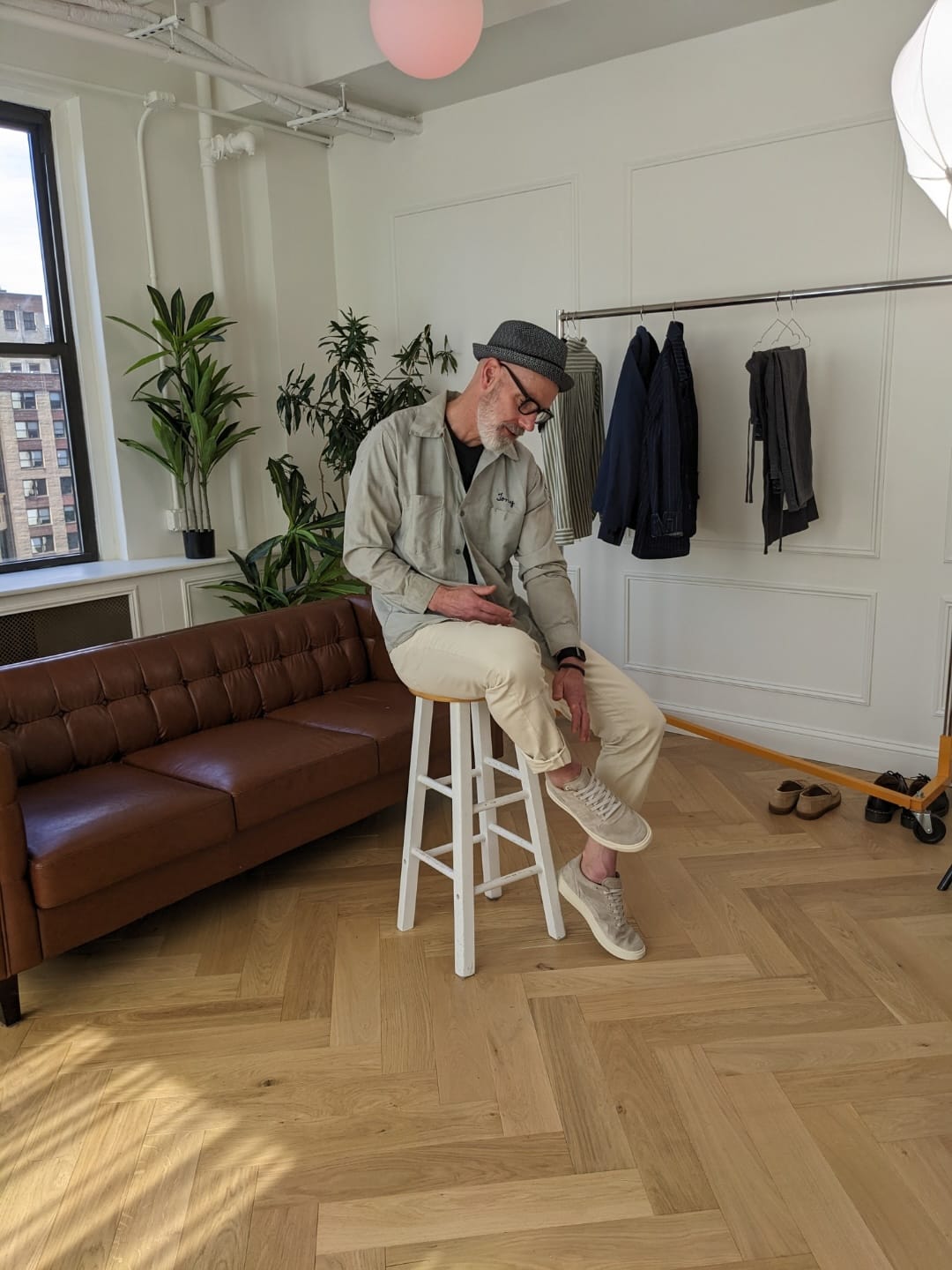
I got to know how the show works pretty well because I was on it.
They brought me to NYC. They gave me new pieces to wear. They filmed all of it. And then they sent me back into my life with a set of small changes that were, in retrospect, things that made a big difference.
I got Megan on the phone to talk about what she's building. And what I learned is that the show is really about something bigger than what to wear.
Me: You keep using the word "apathy." That's a stronger word than "makeover." Why that word?
Because "makeover" implies the person needed fixing. That's not what we're doing. Most of the men we work with aren't unstylish. They're not making bad choices. They've stopped making choices at all. They're on autopilot. And when you're on autopilot about how you show up in the world, everything downstream of that starts to slide too. Confidence. Presence. How you carry yourself into a meeting or a dinner or a date with your wife. Apathy is the enemy because it's invisible until you name it.
I sat with this for a while after the call because it was hard to admit she was talking about me. But she was. Apathy doesn't look like a crisis. It looks like a guy in his beat-up gray t-shirt, one he's owned for years and stopped noticing he owns. This version of you is not something that most people clock as anything wrong. That's why it happens. Nobody's going to intervene on you for it. My wife isn't going to leave. Your kids aren't going to say anything. It just quietly compounds until one day the guy in the mirror is a little less than the guy you meant to be.
Me: Your episodes are under three minutes. Shot vertically. Built for TikTok and Instagram. That's a very deliberate format choice. Why?
Because the men we're trying to reach are not going to sit down and watch a 45-minute makeover show on cable. They don't have the time and they don't have the attention. They're on their phone between meetings, or in the car line waiting for their kid, or in bed at 11 PM scrolling for five minutes before they pass out. If I can't reach them in three minutes on their For You page, I can't reach them. The format isn't a limitation. It's the whole strategy.
There's a discipline here that reminds me of what Adam at NYSTND told me a few months back. Small brands survive by picking one narrow thing and doing it obsessively well. Megan could have made a longer show. She could have pitched it to a network. She's chosen a shorter, harder-to-monetize format because it's the format that actually reaches the people she's trying to reach. That's not a compromise. That's the point.
Me: Something you said earlier really stuck with me. You said one of your goals is to reach men directly, not to reach women who then share the content with their husbands. Why is that important enough to be a stated goal?
Because most content about men's self-improvement is actually consumed by women. The wives, the girlfriends, the sisters. They read it and they forward it to the man in their life. And that's fine, except it means the man is receiving the advice as a nudge from someone else instead of finding it himself. That framing kills it. Men don't respond well to "here's an article my wife sent me." They do respond to something they discovered on their own scroll. The whole distribution strategy is built around getting the content to land on his feed, not hers.
This is the sharpest insight of the call, and it's the kind of thing you only figure out after years of trying to solve a problem the obvious way and watching it fail. The obvious way is to make good content and let it find its audience. The subtle way is to recognize that the pathway the content travels matters as much as the content itself. If it arrives in a man's life as a nudge from your wife, it lands as a criticism. Or if it arrives as a piece of content I stumbled on, it lands differently - as inspiration. Same content. Completely different outcome.
Me: You told me the biggest challenge in casting is getting guests to be authentic on camera. What does that actually mean?
Most of the men we film freeze up. Not because they're media-shy exactly, but because they've spent so long in professional or paternal modes that they don't quite know how to just be themselves on camera. They start performing. They give me the version of themselves they think I want. My job is to strip that away and get them to the version that's real. That's harder than the styling.
I can attest to this. When I was on the show, my first instinct was to be good on camera — to think about saying complete sentences, to look at the right places, to give witty sound bites for the edit. Megan told me later that the thing that actually made my segment work was the moment I stopped performing and just talked. That moment is not accidental. Getting a stranger from performance to presence in a few minutes is a specific skill, and it's most of what the show is really doing. The clothes are the vehicle. The reset is the point.
Me: Last question. Where does this go? What does The Style Reset look like in three years if it works?
It looks like a proper YouTube show, longer episodes, horizontal format, deeper stories about men who've reset something about themselves. We're starting on vertical social because that's how we reach guys today. But the long-term vision is longer content that goes deeper. Same mission, bigger canvas. The mission doesn't change. The mission is helping men become better versions of themselves. That's it.
Which is the whole thing, really. The show isn't about clothes. The clothes are just the entry point. The show is about the fact that a lot of good men are quietly settling for less than they meant to be, and something as small as showing up to a filming and letting someone take an interest in them for a few hours can reset something that had gotten stuck.
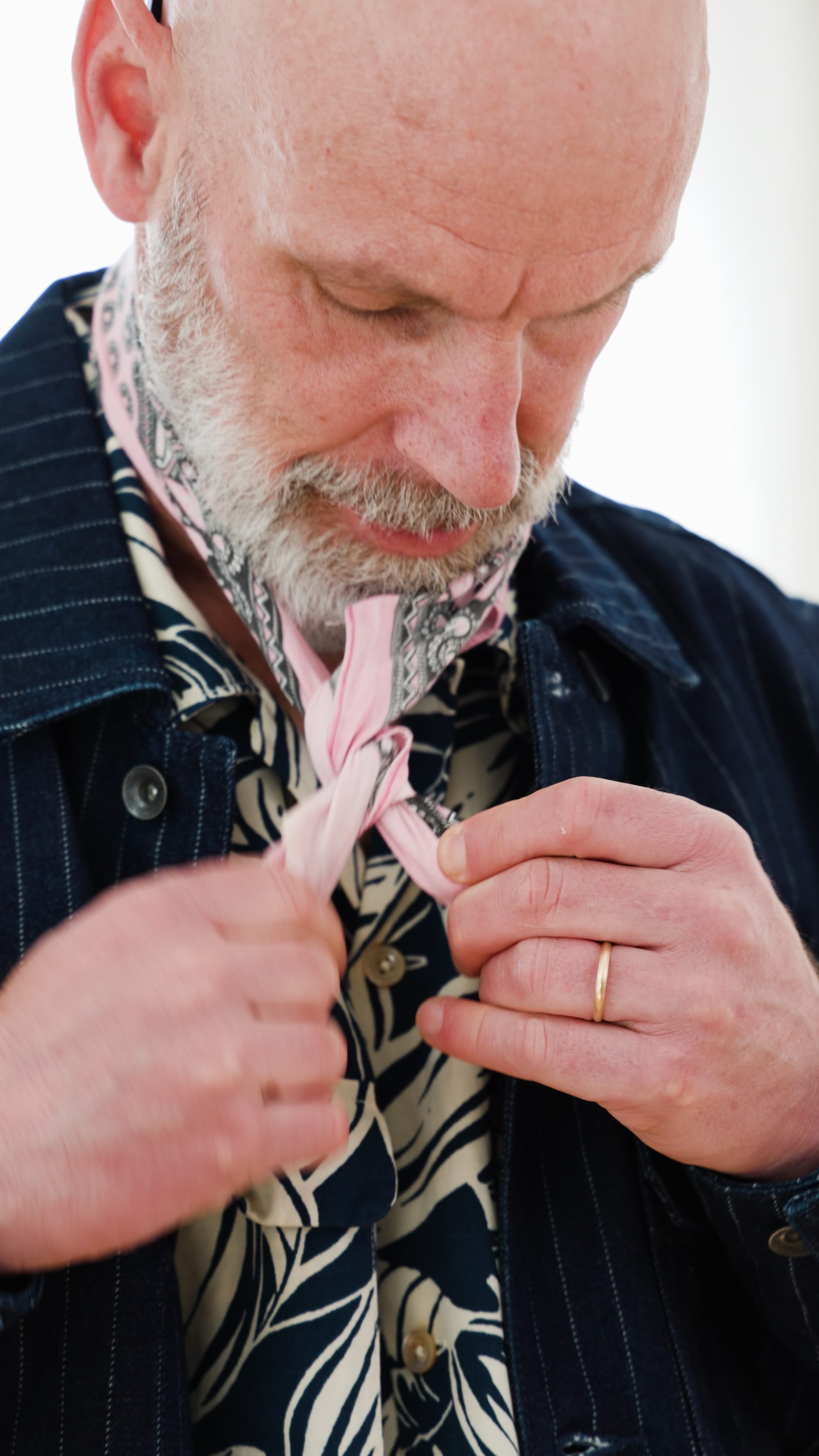
I don't know that I would have described myself as apathetic before I did this. Not the right word. But I recognize now some version of that apathy had crept in. The show didn't fix my life. We'd need a movie for that. But that's not what it was designed to do. What it did was hold up a small, honest mirror and remind me that I still get to make choices about how I show up. The shirts helped. The mirror helped more.
If you're a guy who's read this far and something in it landed harder than you expected, that might be worth paying attention to. Not because you need a makeover. Because you might have quietly stopped making choices about a small set of things that used to matter to you, and Megan's whole thesis is that the smallest of those choices is the easiest lever to pull.
The clothes are the vehicle. The reset is the point.
You can find Reset Mode on StyleGirlfriend's channels, and if you're a dad in the target demographic and you want to be considered for the show, they're casting.
If you want to be notified when I publish something new, you can subscribe here.
— Sean